 English
 Arabic
 French
 Spanish
 Portuguese
 Deutsch
 Turkish
 Dutch
Dutch
 Italiano
 Russian
 Romaian
 Portuguese (Brazil)
 Greek
Greek
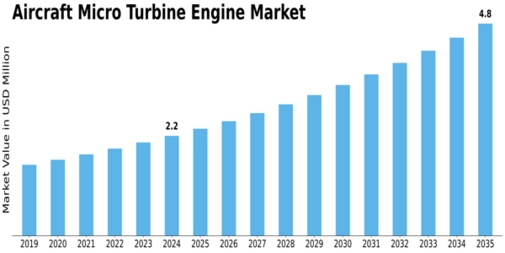
The aviation sector is increasingly reliant on flexible and efficient propulsion solutions. Aircraft micro turbine engines have emerged as a key technology, offering high reliability, compact design, and adaptability to various aviation applications.
The Aircraft Micro Turbine Engines Market is experiencing expansion due to the growing use of UAVs, the evolution of light aircraft, and the development of distributed power systems. These engines offer operational efficiency, reduced weight, and simplified maintenance compared to traditional propulsion systems.
A comprehensive market analysis shows that technological innovations such as digital engine management, vibration control, and alternative fuel adaptability are driving growth. These features make micro turbine engines ideal for applications where space, weight, and efficiency are critical.
Emerging Market Trends
Key trends include the integration of smart monitoring systems, adoption of lightweight materials, and enhancement of fuel efficiency. These advances are enabling engines to operate reliably under extreme conditions while minimizing environmental impact. Micro turbine engines are also increasingly being used in emergency and backup power systems for aviation operations.
The market is expected to continue its upward trajectory as air travel demand increases, UAV adoption grows, and operators prioritize engines that provide high performance with minimal maintenance.
FAQs
Q1: What factors are driving the adoption of micro turbine engines in UAVs?
Their lightweight design, fuel efficiency, and reliability make them ideal for unmanned aviation applications.
Q2: How are new materials improving micro turbine engines?
Advanced composites and alloys enhance durability, reduce weight, and improve overall efficiency.


