English
 Arabic
 French
 Spanish
 Portuguese
 Deutsch
 Turkish
 Dutch
Dutch
 Italiano
 Russian
 Romaian
 Portuguese (Brazil)
 Greek
Greek
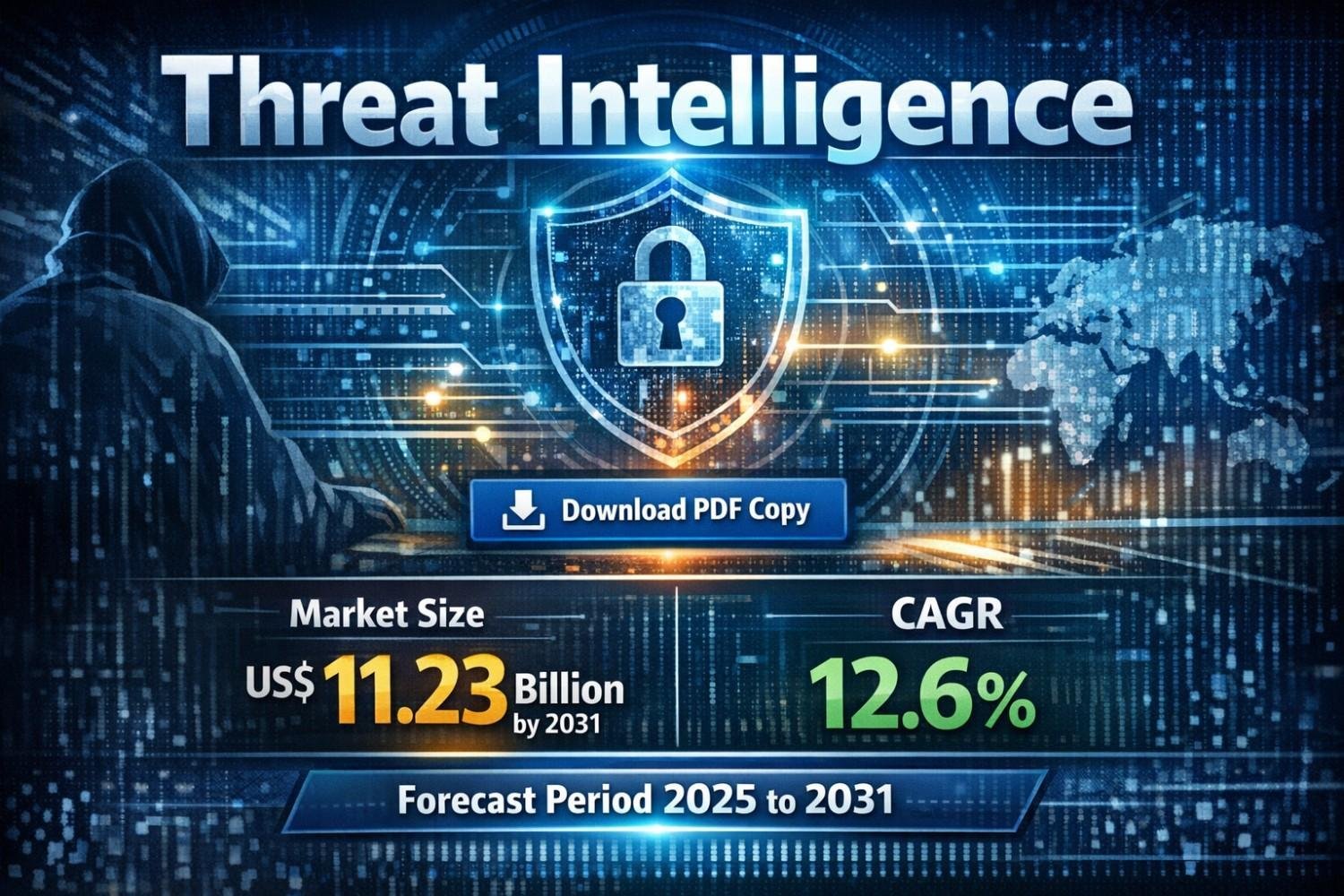
The global cybersecurity landscape is undergoing a radical transformation as digital ecosystems become more complex and interconnected. As enterprises transition to cloud native architectures and expand their digital footprints, the sophistication of cyber threats has scaled proportionally. The Threat Intelligence Market Trends is positioned as a critical pillar of modern defense, moving beyond reactive security measures toward a proactive, predictive posture. The Threat Intelligence Market size is expected to reach US$ 11.23 Billion by 2031. The market is anticipated to register a CAGR of 12.6% during 2025-2031.
Market Overview and Dynamics
Threat intelligence refers to the collection, processing, and analysis of data to understand a cycles motives, targets, and attack behaviors. In the current era, data is the most valuable asset, making it a primary target for state sponsored actors and organized cybercriminal groups. Organizations are no longer satisfied with standard antivirus or firewall solutions. They require actionable intelligence that provides context regarding who is attacking them, why they are doing it, and what vulnerabilities are being exploited.
The surge in high profile data breaches and the proliferation of Ransomware as a Service (RaaS) models are significant catalysts for market expansion. Furthermore, the rapid adoption of Internet of Things (IoT) devices and the rollout of 5G networks have expanded the attack surface, necessitating more robust intelligence feeds. By 2031, the market will likely be defined by automated threat hunting and the seamless integration of intelligence into Security Operations Centers (SOCs).
Download Sample PDF Report@ https://www.theinsightpartners.com/sample/TIPTE100000656
Market Report Segmentation Analysis
The Threat Intelligence Market is multifaceted, and its growth can be analyzed through several key segments including component, deployment mode, organization size, and industry vertical.
By Component
The market is bifurcated into solutions and services. The solutions segment currently holds a significant share, encompassing threat intelligence platforms (TIPs), SIEM integration, and log management tools. However, the services segment is projected to grow at a higher compound annual growth rate through 2031. This is due to the global shortage of cybersecurity professionals, leading many firms to rely on Managed Security Service Providers (MSSPs) for professional consulting, training, and managed detection and response.
By Deployment Mode
Cloud based deployment is set to dominate the market by 2031. While on premise solutions offer localized control, the scalability and cost effectiveness of the cloud allow for the ingestion of massive datasets required for effective threat analysis. Cloud platforms facilitate real time updates and global sharing of Indicators of Compromise (IoCs), which is essential for stopping zero day attacks.
By Organization Size
While Large Enterprises were the early adopters of threat intelligence due to their high risk profiles and larger budgets, Small and Medium Enterprises (SMEs) are emerging as a vital growth segment. As cybercriminals increasingly target smaller businesses with weaker defenses, SMEs are investing in affordable, automated threat intelligence subscriptions to safeguard their operations.
By Industry Vertical
The Banking, Financial Services, and Insurance (BFSI) sector remains the largest consumer of threat intelligence solutions. The high value of financial data makes this sector a perennial target. Following BFSI, the Government and Defense sectors are investing heavily to counter cyber espionage. Other prominent verticals include Healthcare, Retail, and IT and Telecom, each facing unique threats that require specialized intelligence feeds.
Key Players in the Industry
The competitive landscape of the Threat Intelligence Market is characterized by continuous innovation and strategic acquisitions. The top players shaping the market toward 2031 include:
- IBM Corporation
- Cisco Systems, Inc.
- Palo Alto Networks
- CrowdStrike
- Fortinet, Inc.
- Check Point Software Technologies
- Mandiant (Google Cloud)
- Anomali
- Recorded Future
- Trellix
These organizations are focusing on "Intelligence Led Security," where data is not just collected but is automatically turned into defensive actions across the entire security stack.
Future Outlook
The horizon for the Threat Intelligence Market through 2031 looks incredibly promising. We are moving toward an era of "Hyper Automation" where AI driven systems will be able to predict an adversarys next move before the first packet of a malicious payload is even sent. The focus will shift from simple detection to proactive deception and adversary disruption. We can also expect a greater emphasis on "Dark Web Intelligence," where organizations monitor underground forums to identify planned attacks before they manifest in the physical or digital world. As regulatory frameworks around data protection become more stringent globally, threat intelligence will become a mandatory component of corporate governance and risk management strategies.
Frequently Asked Questions
What is the primary difference between strategic and tactical threat intelligence?
Strategic threat intelligence provides a broad overview of the threat landscape, focusing on long term trends and the "who" and "why" behind attacks, often intended for high level decision makers. Tactical threat intelligence is more technical, focusing on the "how," including specific Indicators of Compromise (IoCs) like IP addresses, file hashes, and malicious URLs used by security teams for immediate defense.
How does Artificial Intelligence enhance the Threat Intelligence Market?
AI and Machine Learning are essential for processing the trillions of data points generated daily. These technologies help in pattern recognition, identifying anomalies that human analysts might miss, and reducing false positives. By 2031, AI will enable autonomous threat hunting, allowing systems to neutralize threats without human intervention.
Why is the BFSI sector the leading adopter of these solutions?
The BFSI sector handles massive volumes of sensitive financial data and personal information, making it the most lucrative target for cybercriminals. Additionally, financial institutions must adhere to strict regulatory compliance standards that mandate high levels of data security and proactive threat monitoring, driving consistent investment in intelligence platforms.
The Insight Partners provides comprehensive syndicated and tailored market research services in the healthcare, technology, and industrial domains. Renowned for delivering strategic intelligence and practical insights, the firm empowers businesses to remain competitive in ever-evolving global markets.
• Email: sales@theinsightpartners.com
• Website: theinsightpartners.com
• Phone: +1-646-491-9876
Also Available in: Korean|German|Japanese|French|Chinese|Italian|Spanish