 English
 Arabic
 French
 Spanish
 Portuguese
 Deutsch
 Turkish
 Dutch
Dutch
 Italiano
 Russian
 Romaian
 Portuguese (Brazil)
 Greek
Greek
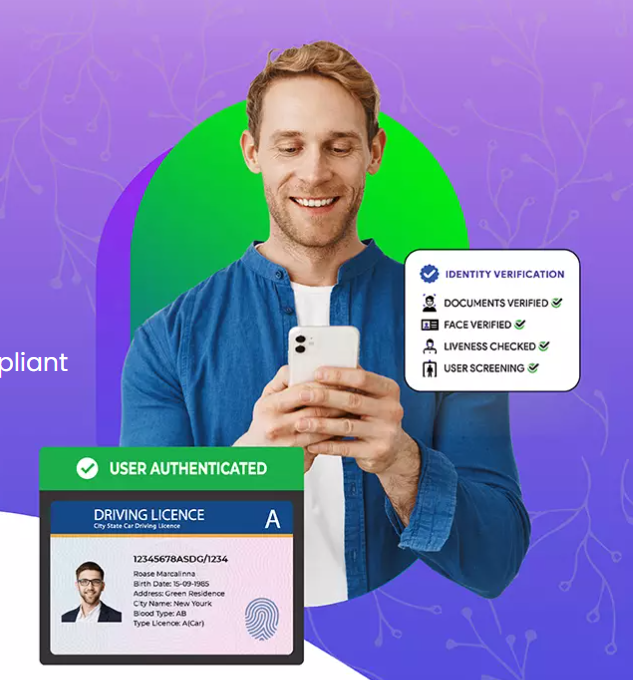
In today’s digital-first world, organizations are under constant pressure to deliver seamless user experiences while preventing identity fraud. Two powerful technologies helping businesses achieve this balance are biometric voice recognition and liveness verification. Together, they create a smarter, more secure, and user-friendly authentication ecosystem for modern enterprises.
What Is Biometric Voice Recognition?
Biometric voice recognition is an advanced authentication method that identifies a person based on their unique voice characteristics. Unlike traditional passwords or PINs, voice biometrics analyzes hundreds of vocal traits such as pitch, tone, speech rhythm, and vocal tract patterns to create a distinct voiceprint.
This technology allows users to verify their identity simply by speaking a short phrase. As a result, it is widely adopted in:
-
Customer support and call centers
-
Mobile banking and digital wallets
-
Telecom onboarding and verification
-
Remote access and enterprise security
For businesses focusing on digital onboarding and KYC compliance, voice-based authentication significantly reduces friction while maintaining a high level of security.
Understanding Liveness Verification
Liveness verification ensures that the biometric sample being presented comes from a real, live person and not from a recording, synthetic voice, or replay attack. In voice-based systems, liveness detection analyzes subtle acoustic signals and behavioral patterns to confirm real human interaction.
This layer of protection is essential because fraudsters increasingly rely on:
-
Recorded voice playback
-
Voice cloning using AI tools
-
Pre-generated speech samples
By detecting natural variations in speech and real-time user responses, liveness verification blocks impersonation attempts before authentication is completed.
Why Voice Biometrics and Liveness Work Better Together
When biometric voice recognition is combined with liveness verification, organizations gain a multi-layered defense system. Voice recognition confirms who the user is, while liveness verification confirms that the user is real and present at the moment of authentication.
Key benefits of this combined approach include:
-
Strong protection against replay and deepfake attacks
-
Faster and frictionless user authentication
-
Improved customer experience without additional hardware
-
Reduced dependency on passwords and OTPs
For digital businesses, this approach also helps meet regulatory and compliance requirements while maintaining smooth customer journeys.
Use Cases Across Industries
Biometric voice recognition and liveness verification are transforming multiple sectors:
-
Banking and fintech – Secure account access, transaction verification, and call center authentication
-
Telecom – Digital SIM activation and remote customer onboarding
-
Healthcare – Secure patient access to telehealth platforms
-
Enterprises – Remote workforce identity verification and access control
Platforms such as Accura Scan integrate voice biometrics and liveness verification into digital identity workflows, enabling businesses to strengthen onboarding, authentication, and fraud prevention processes.
Key Advantages for Modern Businesses
-
Enhanced fraud prevention with real-time identity checks
-
Scalable and cloud-ready deployment
-
Faster customer verification and reduced support costs
-
High accuracy even in remote and mobile environments
As AI-driven fraud becomes more sophisticated, relying on single-factor authentication is no longer enough. Voice biometrics combined with liveness detection provides a powerful defense against evolving threats.
Conclusion
Biometric voice recognition and liveness verification are redefining digital identity security. By validating both the user’s voice and their real-time presence, organizations can deliver faster, safer, and more reliable authentication experiences. For businesses building secure digital onboarding and KYC systems, these technologies are becoming essential pillars of next-generation identity verification.


