English
 Arabic
 French
 Spanish
 Portuguese
 Deutsch
 Turkish
 Dutch
Dutch
 Italiano
 Russian
 Romaian
 Portuguese (Brazil)
 Greek
Greek
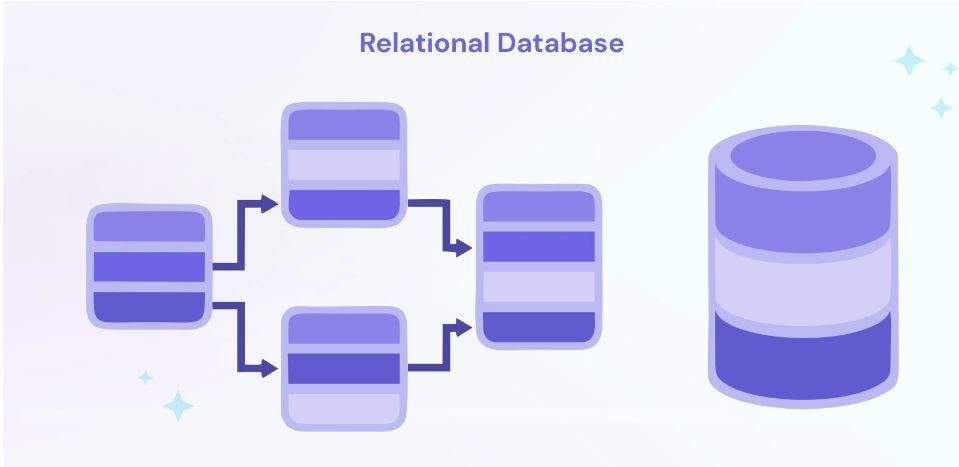
The relational database market, a bedrock of the information technology landscape for decades, is a study in resilience and adaptation. A comprehensive Relational Database Market Analysis using the SWOT framework—Strengths, Weaknesses, Opportunities, and Threats—reveals a mature market that is successfully navigating the disruptive forces of cloud computing and big data. Its ability to maintain relevance and growth is a testament to its foundational strengths and its capacity to evolve. This analysis will delve into the core attributes that make relational databases indispensable, the inherent weaknesses that have given rise to alternatives, the significant opportunities that are fueling a new era of growth, and the competitive and technological threats that challenge its long-standing dominance. Understanding this strategic landscape is essential for technology leaders, developers, and businesses as they architect the data platforms that will power their future operations and innovations in an increasingly data-driven world.
The paramount strength of the relational database is its unwavering commitment to data integrity and consistency, encapsulated by the ACID (Atomicity, Consistency, Isolation, Durability) guarantees. This makes it the undisputed choice for transactional systems where the accuracy of every record is critical, such as in banking, e-commerce, and enterprise resource planning (ERP). Another major strength is the power and standardization of Structured Query Language (SQL). As the lingua franca of data, SQL is known by millions of developers and analysts, creating a massive talent pool and a rich ecosystem of tools built around it. The relational model's rigid schema, while sometimes seen as a weakness, is also a strength in many contexts, as it enforces data quality and predictability at the point of entry, ensuring that the data stored is clean, consistent, and reliable. This inherent reliability and the vast ecosystem of expertise and tooling around it form a powerful and enduring competitive moat.
However, the very characteristics that make relational databases strong also create their primary weaknesses. The rigid, pre-defined schema that ensures data integrity also makes them inflexible. Altering the schema of a large, production database can be a complex and risky process, making it difficult to adapt quickly to changing application requirements. This weakness was a major catalyst for the rise of more flexible NoSQL databases. Another significant weakness, particularly for traditional single-server architectures, is the difficulty of horizontal scaling. While they can scale vertically (by adding more CPU and RAM to a single server), distributing a traditional relational database across a large cluster of commodity servers to handle massive write loads is architecturally complex. This scalability limitation makes them less suitable for certain "big data" applications that involve ingesting huge volumes of unstructured or semi-structured data at a very high velocity.
Despite these weaknesses, the opportunities for the relational database market are immense, primarily driven by the cloud. Cloud-based Database-as-a-Service (DBaaS) offerings have not only made relational databases more accessible and affordable for smaller businesses but have also solved many of the traditional administrative and scaling challenges. The opportunity to migrate trillions of dollars' worth of on-premise database workloads to the cloud represents a massive, multi-decade growth cycle for the market. Another key opportunity is the emergence of distributed SQL databases. These "NewSQL" systems combine the horizontal scalability and resilience of NoSQL databases with the strong consistency and SQL interface of traditional relational databases, creating an opportunity to win back workloads that had moved to NoSQL due to scaling limitations. Furthermore, the integration of advanced analytical features, such as in-memory column stores and machine learning capabilities directly into the RDBMS, creates new opportunities to serve the growing market for real-time operational analytics.
The relational database market, a bedrock of the information technology landscape for decades, is a study in resilience and adaptation. A comprehensive Relational Database Market Analysis using the SWOT framework—Strengths, Weaknesses, Opportunities, and Threats—reveals a mature market that is successfully navigating the disruptive forces of cloud computing and big data. Its ability to maintain relevance and growth is a testament to its foundational strengths and its capacity to evolve. This analysis will delve into the core attributes that make relational databases indispensable, the inherent weaknesses that have given rise to alternatives, the significant opportunities that are fueling a new era of growth, and the competitive and technological threats that challenge its long-standing dominance. Understanding this strategic landscape is essential for technology leaders, developers, and businesses as they architect the data platforms that will power their future operations and innovations in an increasingly data-driven world.
The paramount strength of the relational database is its unwavering commitment to data integrity and consistency, encapsulated by the ACID (Atomicity, Consistency, Isolation, Durability) guarantees. This makes it the undisputed choice for transactional systems where the accuracy of every record is critical, such as in banking, e-commerce, and enterprise resource planning (ERP). Another major strength is the power and standardization of Structured Query Language (SQL). As the lingua franca of data, SQL is known by millions of developers and analysts, creating a massive talent pool and a rich ecosystem of tools built around it. The relational model's rigid schema, while sometimes seen as a weakness, is also a strength in many contexts, as it enforces data quality and predictability at the point of entry, ensuring that the data stored is clean, consistent, and reliable. This inherent reliability and the vast ecosystem of expertise and tooling around it form a powerful and enduring competitive moat.
However, the very characteristics that make relational databases strong also create their primary weaknesses. The rigid, pre-defined schema that ensures data integrity also makes them inflexible. Altering the schema of a large, production database can be a complex and risky process, making it difficult to adapt quickly to changing application requirements. This weakness was a major catalyst for the rise of more flexible NoSQL databases. Another significant weakness, particularly for traditional single-server architectures, is the difficulty of horizontal scaling. While they can scale vertically (by adding more CPU and RAM to a single server), distributing a traditional relational database across a large cluster of commodity servers to handle massive write loads is architecturally complex. This scalability limitation makes them less suitable for certain "big data" applications that involve ingesting huge volumes of unstructured or semi-structured data at a very high velocity.
Despite these weaknesses, the opportunities for the relational database market are immense, primarily driven by the cloud. Cloud-based Database-as-a-Service (DBaaS) offerings have not only made relational databases more accessible and affordable for smaller businesses but have also solved many of the traditional administrative and scaling challenges. The opportunity to migrate trillions of dollars' worth of on-premise database workloads to the cloud represents a massive, multi-decade growth cycle for the market. Another key opportunity is the emergence of distributed SQL databases. These "NewSQL" systems combine the horizontal scalability and resilience of NoSQL databases with the strong consistency and SQL interface of traditional relational databases, creating an opportunity to win back workloads that had moved to NoSQL due to scaling limitations. Furthermore, the integration of advanced analytical features, such as in-memory column stores and machine learning capabilities directly into the RDBMS, creates new opportunities to serve the growing market for real-time operational analytics.
Explore More Like This in Our Regional Reports: