English
 Arabic
 French
 Spanish
 Portuguese
 Deutsch
 Turkish
 Dutch
Dutch
 Italiano
 Russian
 Romaian
 Portuguese (Brazil)
 Greek
Greek
The global sheath fluid market is witnessing a period of significant transformation, driven by the rapid evolution of diagnostic technologies and the increasing prevalence of chronic diseases. Sheath fluid, a critical isotonic solution used in flow cytometry and automated hematology analyzers, plays a vital role in maintaining the hydrodynamic focusing of cells. This process ensures that cells pass through the laser beam in a single file, allowing for precise measurement and analysis. As laboratory automation becomes a standard in clinical and research settings, the demand for high quality sheath fluids has surged, positioning it as an indispensable component in modern medical diagnostics.
The increasing integration of flow cytometry in drug discovery and development processes further bolsters the market. Pharmaceutical and biotechnology companies rely heavily on these fluids for cell sorting and protein analysis, which are essential for developing targeted therapies and vaccines. The consistency and purity of sheath fluid are paramount, as any contamination or fluctuation in pH can lead to inaccurate results, potentially compromising years of research. Consequently, manufacturers are focusing on developing specialized formulations that cater to high sensitivity applications, ensuring minimal background noise and maximum cell viability during analysis.
Download Sample Report - https://www.theinsightpartners.com/sample/TIPRE00006187
Market Size and Growth Projections
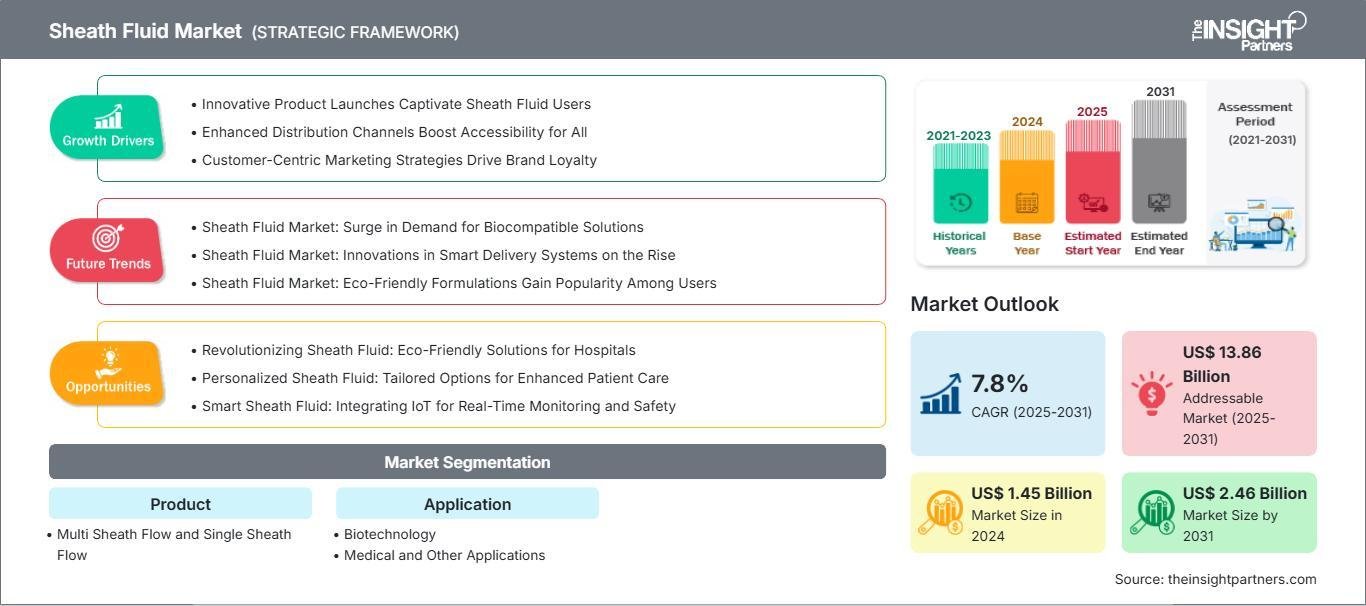
The Sheath Fluid Market size is expected to reach US$ 2.46 billion by 2031. This growth trajectory highlights a robust expansion from previous years, reflecting the broader trend of industrialization in healthcare diagnostics. The market is anticipated to register a CAGR of 7.8% during 2025 2031. This steady growth rate is attributed to the continuous expansion of diagnostic laboratories in emerging economies and the rising adoption of preventive healthcare measures globally. As healthcare infrastructure improves in regions like Asia Pacific and Latin America, the volume of blood tests and cellular analysis is expected to rise, directly impacting the consumption of sheath fluids.
Key Market Drivers
The primary driver for the sheath fluid market is the rising incidence of infectious and chronic diseases such as HIV, cancer, and autoimmune disorders. Flow cytometry is a frontline tool for monitoring immune responses and identifying specific cellular markers associated with these conditions. As the global patient pool increases, the requirement for frequent diagnostic monitoring escalates, thereby driving the recurring demand for sheath fluids and related consumables.
Another significant factor is the technological advancement in flow cytometry systems. Modern analyzers are now capable of multi parametric analysis at higher speeds. These high throughput systems require a constant and voluminous supply of sheath fluid to maintain operational efficiency. Furthermore, the shift from traditional laboratory setups to automated systems has reduced manual intervention, leading to a more consistent use of reagents. This automation not only improves the accuracy of diagnostic results but also creates a stable revenue stream for sheath fluid manufacturers who provide proprietary solutions compatible with specific hardware.
Increased investment in research and development activities within the life sciences sector also serves as a major catalyst. Government funding for genomics and proteomics research has led to an uptick in the use of cell sorters. These instruments consume a considerable amount of sheath fluid during the purification of cell populations. The expansion of academic research institutes and the rise in public private partnerships for medical research ensure that the demand for high grade sheath fluid remains resilient over the forecast period.
Regional Insights and Trends
North America currently dominates the sheath fluid market, supported by a sophisticated healthcare system and the presence of major industry players. The region's focus on precision medicine and advanced diagnostic techniques ensures a high adoption rate for flow cytometry consumables. However, the Asia Pacific region is expected to witness the highest growth rate during the 2025 2031 period. Factors such as a large population base, increasing healthcare expenditure, and a growing number of diagnostic centers in China and India are creating lucrative opportunities for market participants.
A notable trend in the market is the move toward eco friendly and concentrated sheath fluid formulations. Manufacturers are developing concentrated versions that reduce shipping costs and storage space requirements. These concentrates are diluted at the point of use, offering a more sustainable and cost effective solution for high volume laboratories. Additionally, there is a growing preference for "plug and play" sheath fluid containers that minimize the risk of external contamination during the loading process.
Competitive Landscape and Top Players
The sheath fluid market is characterized by the presence of several established players and a growing number of specialized reagent manufacturers. Companies are focusing on strategic collaborations, product launches, and geographical expansion to strengthen their market position. Innovation in formulation and compatibility with a wide range of analytical instruments remain key competitive strategies.
The top players operating in the global sheath fluid market include:
- BD (Becton, Dickinson and Company)
- Beckman Coulter, Inc. (Danaher Corporation)
- Thermo Fisher Scientific Inc.
- Bio-Rad Laboratories, Inc.
- Sysmex Corporation
- Agilent Technologies, Inc.
- Lumene
- Miltenyi Biotec
- Sony Biotechnology Inc.
- Abbott Laboratories
Future Outlook and Conclusion
The outlook for the sheath fluid market remains highly positive as the healthcare industry continues to prioritize rapid and accurate diagnostics. The transition toward personalized medicine and the increasing use of companion diagnostics will further cement the importance of flow cytometry, and by extension, the necessity of high quality sheath fluids. While the market faces challenges such as the high cost of advanced flow cytometry instruments, the long term benefits of improved patient outcomes and research efficiency outweigh these hurdles.
In conclusion, the sheath fluid market is set for a period of steady evolution between 2025 and 2031. With a projected market value of US$ 2.46 billion and a CAGR of 7.8%, the industry reflects the critical role of cellular analysis in modern science. By focusing on innovation and expanding their reach in developing markets, stakeholders can capitalize on the growing demand for diagnostic precision and research excellence.
Related Report:
· Rigid Foam Market Dynamics and Trends by 2027
Contact Information -
Email: sales@theinsightpartners.com
Phone: +1-646-491-9876
Also Available in :
Korean German Japanese French Chinese Italian Spanish