English
 Arabic
 French
 Spanish
 Portuguese
 Deutsch
 Turkish
 Dutch
Dutch
 Italiano
 Russian
 Romaian
 Portuguese (Brazil)
 Greek
Greek
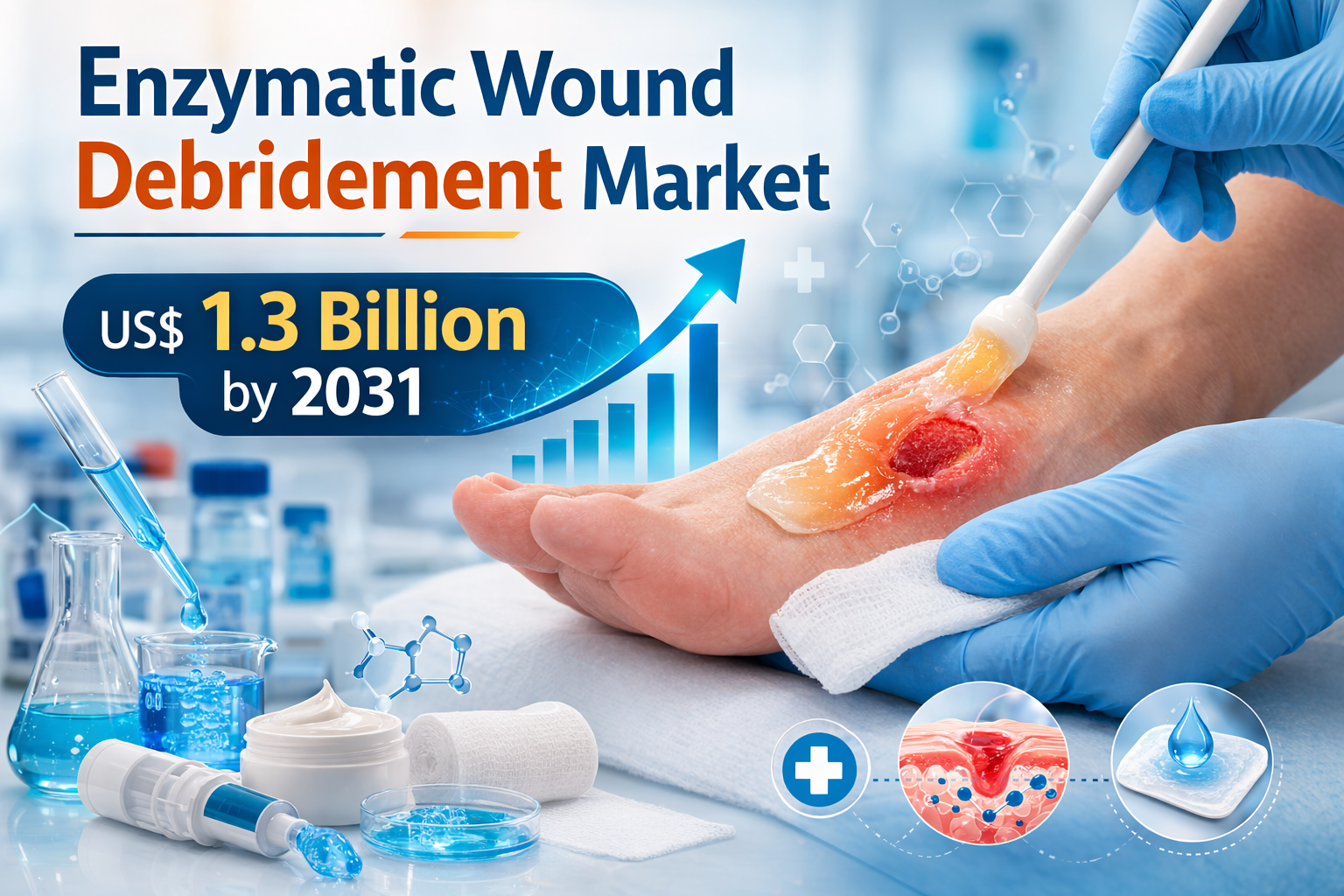
The Enzymatic Wound Debridement Market is experiencing significant growth due to the increasing need for advanced wound care therapies and minimally invasive treatment methods. Enzymatic wound debridement involves the application of enzyme-based agents to remove necrotic or dead tissue from wounds without damaging healthy tissue. This treatment approach supports faster healing and reduces infection risks, making it an important component of chronic wound management. Enzymatic debridement products are commonly used for treating diabetic foot ulcers, pressure ulcers, venous leg ulcers, burns, and surgical wounds.
According to industry insights, the global enzymatic wound debridement market is projected to reach approximately US$1.3 billion by 2031 and is expected to grow at a CAGR of about 6.0% from 2025 to 2031. The market expansion is primarily driven by the increasing prevalence of chronic wounds, rising healthcare awareness, and technological advancements in wound care solutions.
Market Share Analysis by Geography.
The market share analysis by geography reveals that the global enzymatic wound debridement market demonstrates strong regional dynamics driven by healthcare infrastructure, prevalence of chronic diseases, and adoption of advanced wound care technologies.
Download Sample PDF: https://www.theinsightpartners.com/sample/TIPRE00006727
North America currently holds a dominant position in the global enzymatic wound debridement market. The region’s leadership is attributed to the presence of well-established healthcare systems, increasing cases of chronic wounds, and strong adoption of advanced wound care products. Additionally, the presence of major market players and continuous research and development activities further strengthen the region’s market growth. Studies indicate that North America accounts for the largest share of the global market, supported by strong healthcare spending and advanced treatment availability.
Europe represents another significant regional market for enzymatic wound debridement solutions. Countries such as Germany, the United Kingdom, France, and Italy have well-developed healthcare infrastructures and strong regulatory frameworks supporting advanced wound care therapies. The growing aging population in Europe is also increasing the prevalence of chronic wounds, which in turn drives the demand for enzymatic wound care products.
The Asia-Pacific region is expected to witness the fastest growth during the forecast period. Rapid improvements in healthcare infrastructure, increasing healthcare expenditure, and rising awareness about wound care treatments are fueling market expansion in countries such as China, India, Japan, and Australia. Additionally, the growing prevalence of diabetes and associated complications such as diabetic foot ulcers is significantly increasing the demand for advanced wound management technologies in this region.
Regions including South and Central America and the Middle East & Africa are also emerging as potential growth markets. Improving healthcare facilities, increasing government investments in healthcare infrastructure, and expanding access to advanced medical technologies are contributing to market growth in these regions.
Increasing Prevalence of Chronic Wounds Driving Demand
One of the major factors driving the growth of the enzymatic wound debridement market is the rising prevalence of chronic wounds globally. Chronic wounds such as diabetic foot ulcers, venous leg ulcers, and pressure ulcers require long-term treatment and continuous monitoring. Enzymatic debridement products offer an effective and less invasive alternative to surgical wound debridement, making them highly preferred among healthcare providers.
The increasing incidence of diabetes worldwide is particularly contributing to the growth of the market. Patients with diabetes are more likely to develop chronic wounds due to poor blood circulation and impaired immune response. As the global diabetes burden continues to rise, the demand for effective wound care solutions is expected to increase significantly.
Growing Adoption of Advanced Wound Care Technologies
Technological advancements are playing a critical role in the evolution of the enzymatic wound debridement market. Modern enzymatic products are designed to selectively remove necrotic tissue while preserving healthy tissue, which improves healing outcomes and reduces complications.
Healthcare companies are investing heavily in research and development to introduce innovative wound care products such as enzyme-based gels, ointments, and combination therapies. These innovations are improving treatment efficiency and expanding the clinical applications of enzymatic debridement technologies.
Expanding Role of Home Healthcare
The growth of home-based healthcare services is creating new opportunities for the enzymatic wound debridement market. Patients with chronic wounds often require frequent dressing changes and continuous treatment. Enzymatic wound care products are easy to apply and can be used safely outside hospital settings, making them suitable for home care applications.
Healthcare systems worldwide are increasingly promoting home healthcare services to reduce hospital admissions and lower healthcare costs. This shift toward decentralized care models is expected to drive the adoption of enzymatic wound debridement solutions in the coming years.
Market Segmentation Overview
The global enzymatic wound debridement market is segmented based on product type, wound type, end user, and geography.
By Product
· Collagenase Products
· Papain Products
· Other Enzymatic Debridement Products
Among these, collagenase-based products dominate the market due to their effectiveness in removing necrotic tissue and supporting wound healing.
By Wound Type
· Venous Leg Ulcers
· Diabetic Foot Ulcers
· Pressure Ulcers
· Surgical and Traumatic Wounds
· Burns
· Other Wounds
Chronic wounds represent a significant segment because they require prolonged treatment and frequent wound care management.
By End User
· Hospitals
· Ambulatory Surgery Centers
· Clinics
· Home Care
Hospitals and specialized wound care clinics hold a large share of the market due to the availability of skilled healthcare professionals and advanced treatment facilities.
Leading Companies in the Enzymatic Wound Debridement Market
The enzymatic wound debridement market is highly competitive, with several companies focusing on product innovation, strategic partnerships, and geographic expansion. Key players operating in the market include:
· ConvaTec Group PLC
· Smith & Nephew
· Mölnlycke Health Care
· B. Braun Melsungen AG
· Integra LifeSciences
· MediWound
· Next Science Limited
· PAUL HARTMANN Limited
· Coloplast Corporation
These companies are investing significantly in research and development to launch advanced enzymatic wound care products and strengthen their global market presence.
Future Outlook
The Enzymatic Wound Debridement Market is expected to witness steady growth through 2031 due to increasing demand for advanced wound care therapies and minimally invasive treatment methods. Rising healthcare investments, expanding geriatric populations, and increasing prevalence of chronic diseases will continue to drive market expansion.
Moreover, ongoing technological innovations and growing adoption of home-based wound care solutions are expected to create new opportunities for market participants. As healthcare providers continue to prioritize effective wound management strategies, enzymatic wound debridement solutions will remain an important part of modern wound care treatment.
About Us
The Insight Partners is a global market research and consulting firm that provides actionable insights across a wide range of industries. Our research reports offer comprehensive analysis of market trends, competitive landscapes, and emerging opportunities, helping businesses make informed strategic decisions.
Contact Us
The Insight Partners
Email: sales@theinsightpartners.com
Recent Report
Skin Boosters Market Trends, Size & Forecast by 2034
Biomanufacturing Specialty Chemicals Market Growth, Trends & Demand by 2034